Trying to buy your first home in Old South and wondering how to turn your RRSP into a down payment? You are not alone. Many first-time buyers in N6C use the federal Home Buyers’ Plan to bridge the gap between savings and today’s prices while keeping cash flow on track.
In this guide, you will learn how the Home Buyers’ Plan works, who qualifies, how to time the withdrawal and repayment, and smart ways to pair it with an FHSA. You will also see simple, Old South style budget examples that show what the numbers look like. Let’s dive in.
What the Home Buyers’ Plan is
The Home Buyers’ Plan lets eligible first-time buyers withdraw from their RRSPs to buy or build a qualifying home without paying tax on the withdrawal, as long as you repay it on schedule. According to the Canada Revenue Agency, the maximum withdrawal is $35,000 per person. If both partners qualify, you can combine amounts for up to $70,000 toward your down payment. You need to intend to live in the home as your principal residence within one year of purchase.
For full rules and definitions, see the CRA’s overview of the Home Buyers’ Plan.
Who qualifies in Canada
To use the HBP, you must be a resident of Canada and generally a first-time homebuyer under CRA rules. In short, you cannot have occupied a home that you or your spouse or common-law partner owned as a principal residence during the four-year period before the withdrawal. There are specific exceptions in the CRA guidance, including certain situations after a relationship breakdown.
You also need a written agreement to buy or build a qualifying home and must intend to occupy it as your principal residence no later than one year after purchase. Each person must qualify on their own to withdraw.
How withdrawals work
You request your HBP funds through your RRSP provider using CRA Form T1036. Confirm the provider’s processing timelines since they may need several business days to release funds to match your closing schedule.
- Use CRA Form T1036, Home Buyers’ Plan Request to Withdraw with your RRSP issuer.
- Plan ahead so the funds are available before your mortgage funding and closing date.
- Keep a copy of your purchase agreement and confirm your Canadian residency and first-time status.
Only RRSP funds are eligible. Locked-in plans typically do not qualify unless a permitted transfer applies under CRA rules. Review the CRA guidance or speak with your RRSP provider to confirm.
Repayments and timelines
HBP withdrawals are repaid to your RRSP over 15 years. Your first required repayment happens in the second year after the year you withdrew. The annual minimum is 1/15 of the amount you withdrew.
- Example: Withdraw $35,000. Minimum annual repayment is $2,333 which is about $194 per month.
- If you and your partner each withdraw $35,000 for a total of $70,000, each person repays their own $2,333 per year.
- You can repay more than the minimum to shorten the timeline.
If you do not make the required repayment in a given year, that year’s required amount is included in your income and taxed like an RRSP withdrawal. When you contribute back to your RRSP, you must designate the contribution as an HBP repayment on your tax return. HBP repayments do not create a new RRSP deduction.
How HBP fits Old South budgets
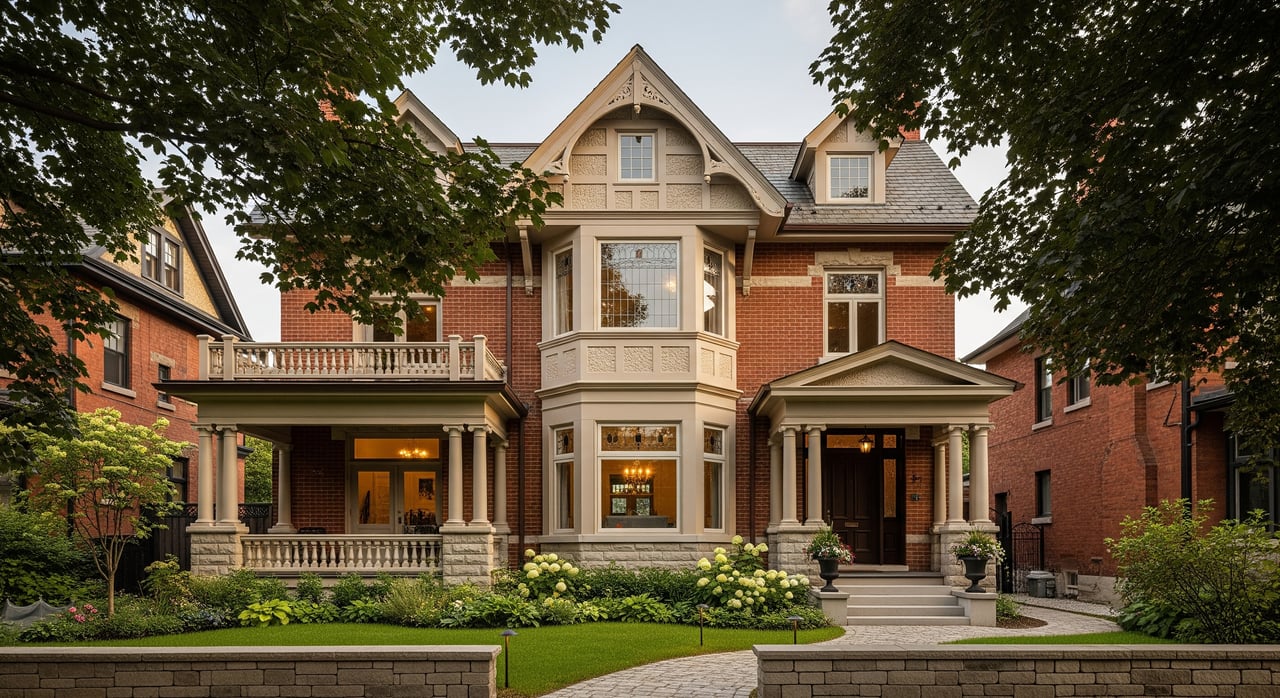
Old South is known for walkable streets, character homes, and close access to Wortley Village and downtown. Prices vary based on condition, size, and location. The examples below show how buyers often combine HBP funds with the minimum down payment rules. These are illustrative only. Check current Old South pricing through recent LSTAR market updates and active listings before you set a target price.
Scenario A: $400,000 condo or semi
- Purchase price: $400,000
- Minimum down payment: 5% of $400,000 = $20,000
- HBP approach: A single buyer withdraws $20,000 from RRSP. This covers the minimum down payment.
- Repayment: $20,000 ÷ 15 = $1,333 per year which is about $111 per month.
- Tip: If you have FHSA funds, you could reduce the RRSP withdrawal, preserve more of your retirement savings, and lower the annual HBP repayment amount.
Scenario B: $650,000 single-family
- Purchase price: $650,000
- Minimum down payment: 5% of first $500,000 = $25,000, plus 10% of the next $150,000 = $15,000. Total = $40,000
- HBP approach: A single buyer withdraws the max $35,000 and covers most of the minimum down payment, then adds $5,000 from savings or an FHSA.
- Repayment: $35,000 ÷ 15 = $2,333 per year which is about $194 per month.
- Couple option: If both partners qualify and each withdraw $35,000, you could cover the $40,000 minimum and use the remainder to reduce your mortgage principal.
Scenario C: $900,000 character home
- Purchase price: $900,000
- Minimum down payment: 5% of first $500,000 = $25,000, plus 10% of the next $400,000 = $40,000. Total = $65,000
- HBP approach: A single buyer’s HBP max $35,000 covers part of the minimum, then adds $30,000 from savings or FHSA.
- Couple option: Two qualifying buyers can combine $35,000 + $35,000 = $70,000, which can cover the $65,000 minimum.
- Repayment: If two people each withdraw $35,000, combined required repayments total $4,666 per year, about $389 per month.
These monthly equivalents help you compare the HBP repayment with your expected mortgage payment and other costs. Share your plan with your lender so they can model cash flow accurately.
HBP, FHSA, and your down payment
The HBP and the First Home Savings Account are complementary tools. The FHSA lets you make tax-deductible contributions and withdraw tax free for your first home, up to a lifetime contribution limit of $40,000 under the rules introduced in 2023. You can use both the FHSA and HBP on the same purchase. Smart planning across both accounts can reduce how much you need from your RRSP while still meeting your down payment target.
Read the CRA’s guidance on the First Home Savings Account to understand contribution room, transfers, and withdrawal rules.
Mortgage rules to keep in mind
Most first-time buyers rely on the minimum down payment rules set by the Government of Canada. For insured mortgages, the minimum is:
- 5% of the purchase price up to $500,000
- 10% of the portion between $500,000 and $999,999
- 20% minimum for purchases of $1,000,000 and above
You can confirm these rules on the Government of Canada’s overview of minimum down payments. If your down payment is less than 20% on a purchase under $1,000,000, mortgage default insurance will apply. Learn how insurance works on CMHC’s page about mortgage loan insurance.
Lenders consider your credit, income, debt ratios, and the source of your down payment. The HBP repayment is not a conventional loan payment, but some lenders factor it into affordability or budgeting. Disclose your HBP plan early so your lender or mortgage broker can advise on qualification.
A simple step-by-step checklist
- Confirm your HBP eligibility under CRA rules, including residency and first-time buyer definitions.
- Pin down a price range using recent Old South activity. Review the latest LSTAR market updates and current listings.
- Speak with a mortgage broker or lender about down payment requirements, insurance, and how HBP repayments may be considered in your approval.
- Coordinate FHSA and RRSP contributions so you can withdraw efficiently and reduce tax. The FHSA can help preserve more of your RRSP.
- Complete CRA Form T1036 with your RRSP issuer and allow several weeks for processing before closing.
- Keep your purchase agreement and occupancy plans handy in case your provider requests proof.
- Map your HBP repayment in your budget. Convert it to a monthly amount, and set reminders so you do not miss a year.
Common trade-offs to weigh
- Using RRSP funds reduces invested retirement savings until you repay them. Consider the impact on long-term growth.
- Missing a required HBP repayment adds that amount to your taxable income for the year.
- The HBP can help you reduce the size of an insured mortgage, but talk with your lender about how they treat the HBP repayment in your affordability review.
Local guidance that puts you first
Buying your first Old South home is a big step, and you deserve clear, local advice. If you want help aligning your price range, down payment plan, and timeline, reach out to Scott Gunn for neighbourhood-specific guidance backed by appraisal-informed insight.
FAQs
Who can use the Home Buyers’ Plan in Canada?
- The CRA allows eligible first-time buyers who are Canadian residents to withdraw RRSP funds for a qualifying home, with conditions on occupancy and repayment.
Is an HBP withdrawal taxable for first-time buyers?
- Not if you meet CRA conditions and make required repayments on time; missed repayments are included in your income for that year.
How long do I have to repay HBP withdrawals?
- You have 15 years, and the first required repayment is due in the second year after the year you withdraw; the annual minimum is the withdrawn amount divided by 15.
Can both partners use the HBP on one Old South purchase?
- Yes, if both qualify individually; each can withdraw up to $35,000 for a combined total of up to $70,000 toward the same home.
How do the HBP and FHSA work together for down payments?
- They are complementary; you can draw from both to meet your down payment target while balancing tax advantages and preserving some RRSP savings.
Will lenders count HBP repayments when I qualify for a mortgage?
- Lenders differ; disclose your plan early so your broker or lender can model affordability and document your down payment source.